RG52 Mini | A Casual Gamer's Review
Go too far down the price ladder and a handheld starts to feel like a toy. The RG52 Mini sits right on that line.
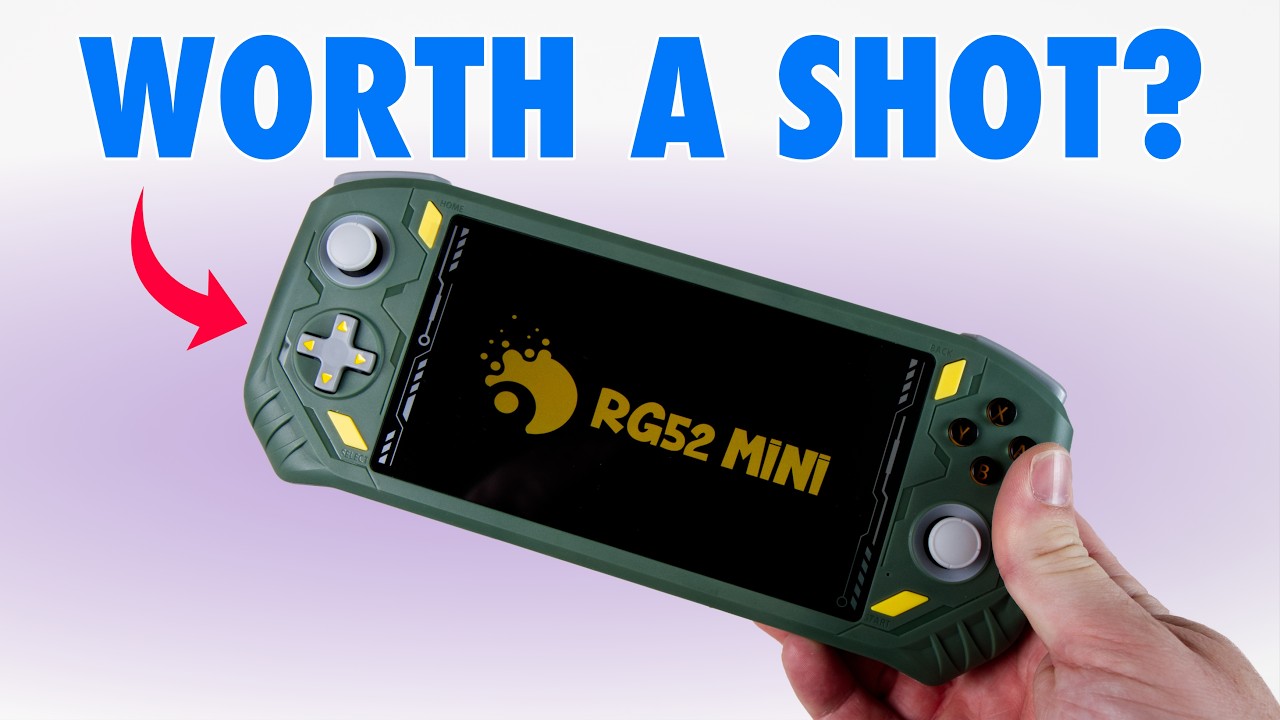
Right on the Boundary
Gaming is getting pretty expensive, so it’s always worth keeping an eye out for a budget handheld that does everything you want at an affordable price. The problem is that if you go too far down the cost spectrum, you reach territory where a device stops feeling like a handheld and starts feeling like a toy or a novelty gift. I’d say the RG52 Mini sits exactly on that boundary. Depending on your priorities, you’ll either think it’s a great deal or something to skip.
Capable on Paper, and in Practice
At first glance the RG52 Mini is a decent little device. It has 2GB of RAM and 4GB of internal storage and runs on Linux, so although those numbers sound modest, it has the headroom to run some pretty decent systems, all the way up to the PSP and Dreamcast. It ships with an SD card packed with 22,000 ROMs. You can opt out of that if you’d rather have a clean card for your own ROMs, but to show you how I received the unit, I played it with the ROMs that came installed.
Every system I tried worked really well straight out of the gate. There’s a little stuttering in some of the more demanding PSP titles, but you’ll be able to play every system as advertised. One thing to watch is that systems like the Mega Drive or Master System will try to stretch the image to fill the 5.5-inch display. Thankfully the operating system gives you plenty of room to tweak things, and you can adjust the display proportions in the game’s settings to get the original aspect ratio.
The 5,000mAh battery gave me around three to three and a half hours, although this is a budget device and your mileage will vary with the systems you play. In performance terms, it’s really capable for the price. It can match slightly more expensive Android models like the MANGMI Air X because it isn’t weighed down by Android. The big difference is build quality and the physical, tactile experience, and that’s where it starts to feel more like a toy or a novelty gift than a performance handheld.
It Feels Like a Novelty Gift
Hands-on, it looks like any other handheld at first glance, but you can tell it’s a budget model, and the further you dig into the buttons and features, the clearer it becomes that it isn’t up with devices at around twice the price. It’s certainly capable enough to play through games, and I was running God of War: Chains of Olympus on it. The experience just isn’t as good as on something like the Air X.
The design is fun but toy-like, with hard plastic and an almost army camouflage look. Next to the Air X or a Retroid Pocket, it doesn’t have the same visual flair. It feels sturdy and isn’t uncomfortable to hold thanks to the grips on the back, but the plastic feels sweaty and a bit scratchy, and it’s clearly not the same material as its more expensive rivals. There’s also an area that looks like ventilation, but I don’t think there’s actually a working ventilation system. It seems to be there to give the impression that the device is more capable than it is, which again pushes it towards toy territory.
The display is another clue. It’s a 720p IPS screen and it isn’t a touchscreen, whereas a slightly pricier Android device will more than likely give you a 1080p touch display for Android games. It isn’t the worst display in the world, and the colours look pretty decent, but it’s quite glossy, so you’ll get a lot of reflections out and about, and it won’t match what you’d get at around twice the price.
Sticks, D-Pad and Buttons
The same goes for the rest of the controls. The thumbsticks have a little RGB halo, but they aren’t Hall effect, so there’s no telling how long they’ll last. Nothing suggests they’ll drift any time soon, but it may mean you need to be more careful with the device. They’re also quite small and sit flush with the body, so larger hands may struggle, and they feel noticeably rubbery and plasticky rather than premium.
The layout is questionable too. The PSP is pretty much where the device tops out comfortably, yet the D-pad sits below the left joystick, and for a more comfortable PSP experience I’d want it up top. The D-pad itself isn’t bad and feels responsive, but it lacks tactile feedback. I prefer pads that are a little stiffer, where you can feel that you’ve moved onto another diagonal, and here it feels like everything is pressed at once. The face buttons are the weakest part. They sit very flush, you get almost no sensation as you press, and they feel stiff and muddy. Whatever you play, you’ll rely on those buttons, and they just don’t feel right to me.
The Home and Back buttons are also in a confusing place. I expect them at the base of the device with Start and Select above, as on consoles for as long as I’ve been playing, and here it’s the inverse. Press Home by accident when you meant to skip a scene with Start and you exit the game, and next time you boot the ROM your progress can be completely wiped. On the plus side, there’s a headphone jack, USB-C charging and an SD card slot, and the triggers are fine. They have a decent bounce, a Dreamcast-style rotational feel and a nice click.
Final Thoughts
Because the RG52 Mini feels like such a lower-quality product in the hand than the Air X, I assumed it was around half the price. In fact they cost about the same, hovering between £75 and £110, and that says a lot about my experience with the RG52 Mini. It can run games with ease, but it’s how it feels in the hand that really matters. If you’re looking at budget handhelds, ask yourself whether you value raw performance and a Linux-based operating system, or a more premium build and a slightly cooler aesthetic. There’s another consideration too: the games you want to play. If you’re into fighting games, where an accurate D-pad and good face buttons matter, avoid the RG52 Mini.
My recommendation: If you mostly care about performance per pound and a Linux OS, the RG52 Mini gets the job done. If build quality and feel matter, spend about the same on the MANGMI Air X, which you can read about in my review, and steer clear of the RG52 Mini for fighting games.