Retroid Pocket Nova | A Casual Gamer’s Review
A boxy design, a tall 4:3 screen and a colourway that channels the GameCube I dreamt about as a teenager. This one's made me rethink what makes a handheld stick.
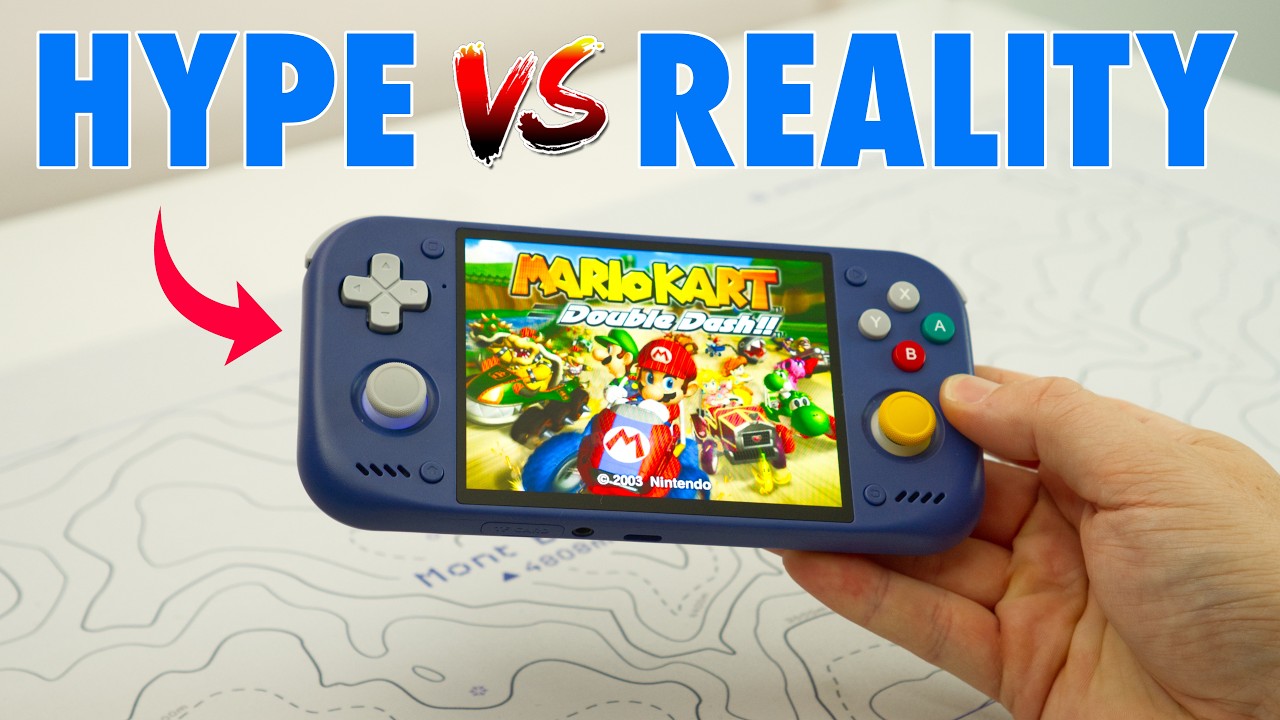
The Portable GameCube I Dreamt About
The Retroid Pocket Nova is a phenomenal device, so good that it made me realise why certain other handhelds never stick with me past the honeymoon phase. I think I’ve worked out what makes it so special. Virtually every retro handheld that launches these days comes with a colour option that nods to a classic console, but the Nova’s boxy design combined with its colourway really makes it feel like the portable GameCube I dreamt about as a teenager. Everything about it feels appealing and joyful, and it makes you want to pick it up and dive into an old favourite.
A Screen That Changes How You Play
At the centre of it all is a beautiful 120Hz, 4:3 AMOLED display at around 4.5 inches, which brings GameCube and Dreamcast games to life like never before. You can play those 4:3 titles at 4x resolution with pretty much edge-to-edge coverage, and the taller screen gives you noticeably more room on the device than something like the Retroid Pocket 6, which is wider but shorter. Despite having a lot of the same buttons and controls, that makes the Nova feel more comfortable to hold.
The third thing the screen does is quietly push you towards 4:3 games, and I didn’t fully register this until I’d spent real time with the Nova. On every other handheld I’ve tested over the past few years, I’ve gravitated towards more performant titles, digging into my Steam library through apps like Game Hub and GameNative. The Qualcomm chip inside the Nova is perfectly capable of running those systems too, but a form factor that suits the GameCube, Dreamcast and PS2 so well makes me want to actually play them here. It’s led me to spend far more time with those retro systems than I would on something like the Retroid Pocket 6, which is really the whole point of picking up a device like this.
Comfort and the Back Shell
I wouldn’t say the ergonomics are perfect. It has that slab-like quality the Switch 2 has too, digging into your palms if you hold it too long, and I find myself cramping up after around an hour. The slim default back shell adds to the charm, but if you find it uncomfortable, there’s an alternative back shell for around $5 on the Pocket Store. It has a bumpy, textured design similar to the Retroid Pocket 6’s. It won’t work wonders, but it gives you a little more to hold onto, and I think it’s more comfortable in the long run.
Fitting it means removing the original back plate, unscrewing four screws and lifting it off with a pick. Retroid includes a screwdriver and a guitar pick in the box, but I wouldn’t recommend using them, since they made the process harder than it needed to be. Trust yourself to do it without them if I managed it. Opening the device up shows a decent little fan inside, which can spin up quite a bit without getting too noisy even at full speed.
Performance Across the Generations
With performance and compatibility similar to a Snapdragon 8 Gen 2, the Nova blazes through lower-end systems like the Mega Drive. Combined with a precise, low-input-lag D-pad, it’s a great way to play something like Street Fighter II, though it’s really the sixth-generation systems where the 4:3 display shines. Dreamcast is probably still my favourite console, and it’s incredible here, and PS1 games really come to life too. The only slowdown I noticed was in Tony Hawk’s Pro Skater 3 on PS2. It generally runs perfectly fine, though I’ve had a few odd moments where the whole game briefly ground to a halt, which I haven’t managed to catch on camera.
None of this stops you playing these titles on a device with a larger or wider screen, and widescreen hacks can make them feel even more immersive elsewhere. But there’s something genuinely magical about a device that marries its hardware design with the software you want to be playing in such perfect harmony.
Final Thoughts
Even within Retroid’s own range, the Nova has stiff competition from the Retroid Pocket 6 and the upcoming Retroid Pocket Duo, arriving in October, and on paper they’re all similarly priced. It might seem silly to pick the one with a display aspect ratio that locks you into a certain generation of systems, but I think that’s actually the point. The 4:3 aspect ratio makes the screen a little taller than the Pocket 6’s, gives your hands more to hold onto, and lets the case be a bit shorter and slimmer.
The Retroid Pocket Nova may not be the endgame handheld for everything, but for the specific set of systems that hit the sweet spot of that 4:3 aspect ratio, I think it pretty much is.
My recommendation: If you grew up playing the Dreamcast or the GameCube, I have no hesitation recommending the Retroid Pocket Nova. If your library leans towards more demanding or widescreen titles, a device like the Retroid Pocket 6 will suit you better.