The Legion Go S is All I Need
The Legion Go S doesn’t have an OLED display, detachable controls or even a current gen chip. And yet, this could be the best handheld gaming PC for most people.
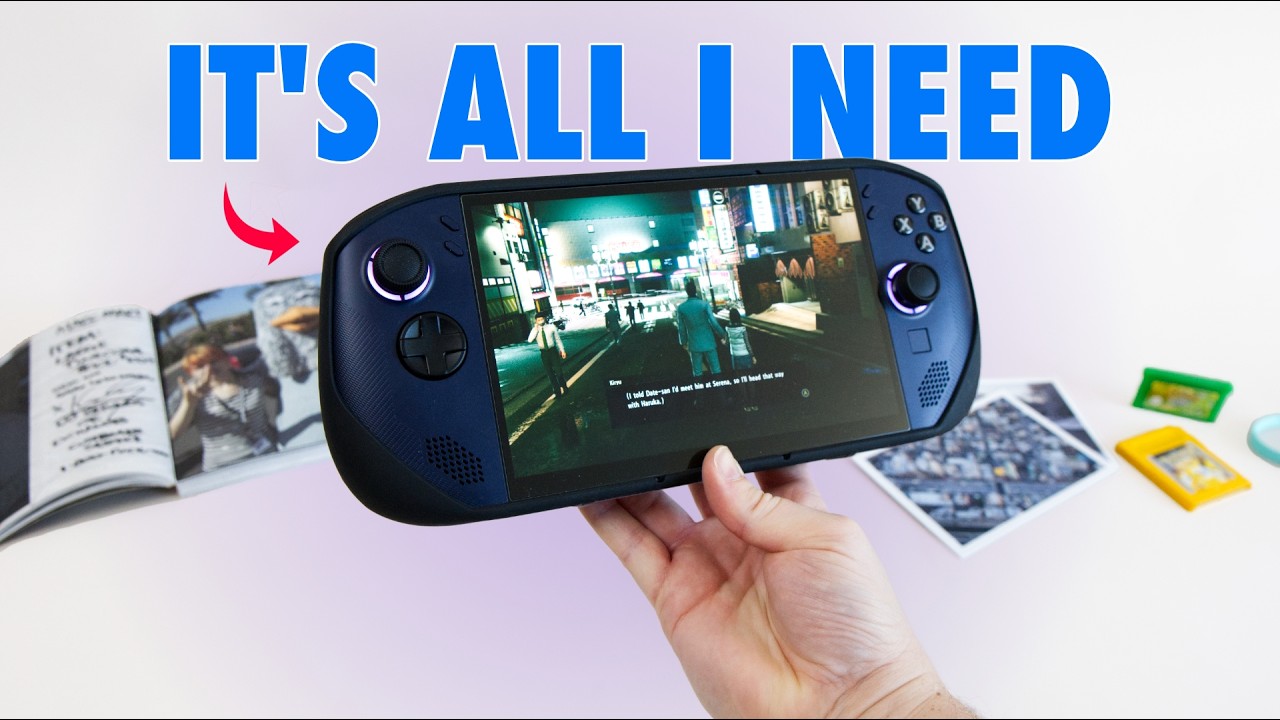
Is Legion Go S the End Game?
The Legion Go S lacks an OLED display, detachable controllers, and a current-gen chip, yet it might still be the best handheld gaming PC for the average person. While it sits technically as the “awkward middle child” between the Steam Deck OLED and the original Legion Go, in practice, it feels like the ultimate sweet spot.
Why Bother with a Last Gen Chip?
The Legion Go S has become my go-to for PC gaming. While it won’t run the latest titles flawlessly at ultra settings, it handles demanding games surprisingly well. I was able to run Indiana Jones and the Great Circle on Medium settings. Titles like Metaphor: ReFantazio run at 1080p/40 FPS without any setting tweaks, no doubt helped by its 32GB of RAM.
Unlike some competitors, it comes standard with a 1TB SSD, which is essential if you plan on installing modern, high-capacity games. Sure, the Legion Go 2 (with the Z2 Extreme chip) will offer better performance, but it is expected to cost nearly double the price of a Go S. For most people, that upgrade won’t be worth it.
But it’s not OLED…
The lack of an OLED panel is the biggest sticking point for many. However, the Legion Go S proves that a high-quality LCD can still be beautiful.
If you are switching from a Steam Deck OLED, you will notice a decrease in dynamic range, especially since the Go S lacks HDR compatibility. Darker game sections can feel like a compromise even with the 500 nits of brightness.
The “saving grace” is the 8-inch, 1920x1200 (16:10) display. The extra screen real estate is a game-changer for text-heavy RPGs or expansive environments—especially for those of us in our “reading glasses era.” The 120Hz refresh rate and VRR (Variable Refresh Rate) support do an excellent job of smoothing out performance dips caused by the older chipset.
Controls and Design
The Legion Go S is a much more focused, less “experimental” device than its predecessors. Lenovo jettisoned the detachable controllers for a fixed, all-in-one body, resulting in a more coherent and comfortable design.
To replace the “FPS/Mouse Mode” of the original, Lenovo added a tiny trackpad.While it’s no replacement for the Steam Deck’s dual pads, it is vital for navigating Windows pop-ups and game launchers.
You get two back buttons (compared to the Steam Deck’s four). If you rely on heavy input customisation, this might feel like a downgrade; for everyone else, it’s a more streamlined feel.
One of the best features is the choice of Windows or SteamOS preinstalled on your device. You don’t have to deal with the “rigmarole” of installing Bazzite or third-party forks; you just pick your OS and go from there.
The Verdict
The Legion Go S is a (relatively speaking) modest device catering to console gamers or those who want an easy, pick-up-and-play experience. Its drawbacks—the older chip and the LCD screen—feel like intentional design choices to keep the price from becoming astronomical while maintaining a premium feel. Honestly, this thing is hard to put down.