The KONKR Pocket Advance Went Beyond My Expectations!
I bought it to talk about the specs. It turns out I just love it, and it might be the best pocketable handheld I've used for micro gaming sessions.
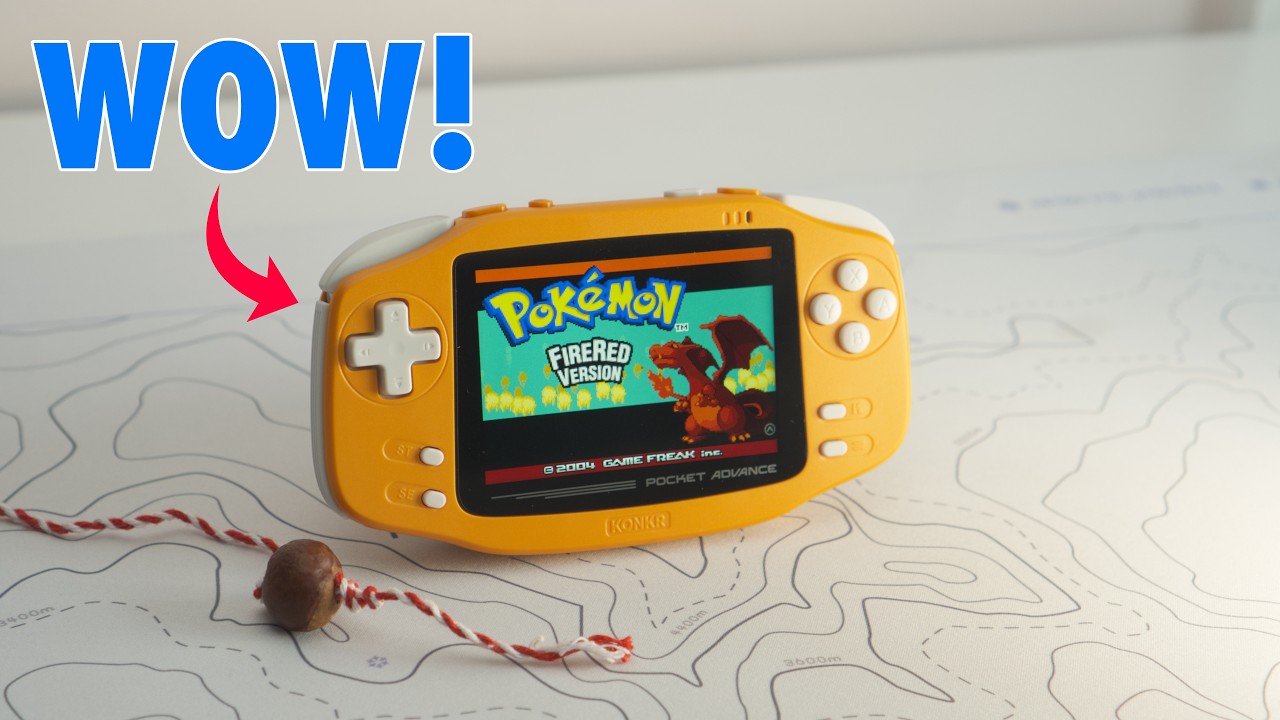
An HD Remaster of the GBA
The KONKR Pocket Advance is an HD remaster of the GBA that’s given me a whole new appreciation for Nintendo’s classic handheld. I bought it with my own money, mainly so I could tell you about its specs, how it feels in the hand, and how it performs across Game Boy Advance, PlayStation and Dreamcast. It turns out I simply love it.
At a glance, you could easily mistake it for an original GBA. KONKR has stayed very faithful to the classic design, but it’s a little bigger and bulkier, which leaves room for some modern flourishes. The best example is the 3.5-inch LCD, whose 3:2 aspect ratio is perfect for Game Boy Advance games, which you can play at 4x resolution. People are often hesitant about LCD displays, but games look so crisp and vivid on the Pocket Advance that it doesn’t matter. Because the resolution fits the screen perfectly, you don’t get black borders down the sides while playing GBA.
Under the Hood, and a Note on AYN
The Pocket Advance uses the MediaTek Helio G90T chip and comes in 3GB or 4GB versions. I went for the 3GB model, which has taken me all the way up to Dreamcast so far, but be aware that some Android games list 4GB as a minimum. Pokémon Champions, for example, won’t run on Android 12 at all.
I’m clearly a big fan, but a small note on KONKR, which is part of the AYN brand. AYN has a bit of a chequered past in its attitude to customers. It has improved how it rolls out new products, simply by listing the Pocket Advance on its own website rather than through something like Indiegogo or Kickstarter, but the launch wasn’t perfect. AYN initially made it seem like a very limited launch, so people like me ordered almost as soon as the listing went up. The very next day they dropped a new colourway, a beautiful peach version that I’d absolutely have picked, but I’d already ordered the yellow coral. I do like the coral, but it’s annoying that I didn’t get the choice at launch.
As a Brit, I’ll add that the name has a doubly nostalgic meaning for me. As kids we all played conkers, where you put a horse chestnut on a string and try to knock the other person’s off. I’m sure it’s unintentional, but it’s a great name for us.
Build and Controls
The Pocket Advance is the perfect form factor to throw in a bag and take on the bus, and its sturdy plastic casing feels really premium for the price. I’d got used to devices with a glass panel over the display and controls, so it’s nice to return to a plastic shell that feels consistent across the whole device. It’s well built in every respect and doesn’t rattle at all.
The face buttons are a good size for the device, soft and responsive, and not loud at all, so you can play while your other half is in bed without waking them. The D-pad felt a bit sticky, or at least rigid, at first, but after working it in over the past week it’s become really responsive and solid. It might be one of my favourite D-pads in a long time. Start and Select sit on the left, and the Pocket Advance gives you extra buttons around the device to help you control Android, including additional shoulder-style buttons. The R1 and L1 shoulder buttons are delightful, with a nice padded feel, and again they aren’t loud.
The bottom has a microSD slot, a USB-C port, a headphone jack and a little volume wheel, a nice retro touch that’s well placed, so you won’t change the volume by accident. It’s quite sensitive, though, and I keep it low, since there isn’t much nuance from one step to the next and it can swing wildly between too loud and too quiet. Those speakers can get incredibly loud.
GBA, PlayStation and Dreamcast
The GBA is where it really shines. I’ve been playing with the pixelated shader, which gives 4x resolution, and it looks absolutely stunning. If you want to stack shaders and go heavier on RetroArch, I’d go for the 4GB version, because the shaders I threw on completely tanked performance. I actually love how dedicated the design is to the GBA, since it stops me reaching for my Steam library as I tend to on slightly larger Android handhelds.
PlayStation runs really well too. I had a great time with Ridge Racer. The 4:3 aspect ratio doesn’t fill the whole screen, but it still looks good and runs perfectly. Dreamcast is a slightly mixed bag. In Tony Hawk’s Pro Skater 2, the first level, the hangar, runs perfectly with no stutters, but on the more expansive levels the frame rate struggles, and you have to put the handheld into a gaming or performance mode, which triggers the fans. They get pretty loud and have a slightly high pitch, so if you want Dreamcast on this, go for the 4GB version. The 4:3 aspect ratio isn’t far from the 3:2 screen, so stretch mode in Redream actually looks pretty great, and I’ve been playing that way. It feels like a cardinal sin to stretch the display, but it’s working so far.
Final Thoughts
The Pocket Advance is a great little device, but what I didn’t expect was how it would fill a niche in my gaming landscape. I’m playing it a lot more than I thought I would, because it isn’t a huge investment, especially in today’s landscape, and it’s a portable format with high-quality materials and a simple design. I’ve been picking it up for micro gaming sessions around the house and on the bus, and it’s become a brilliant little everyday-carry device. I’m not a hardcore GBA fan, since it’s been 30 years since it was my go-to, but being taken back to those days in a renewed modern form factor feels brilliant. If you want to be truly faithful to the original hardware, you’ll find loads of small points where it strays from the original design.
My recommendation: If you want a souped-up Game Boy Advance that can reach into some more modern systems, the Pocket Advance is absolutely worth it. Choose the 4GB model if you want heavy shaders or Dreamcast.